
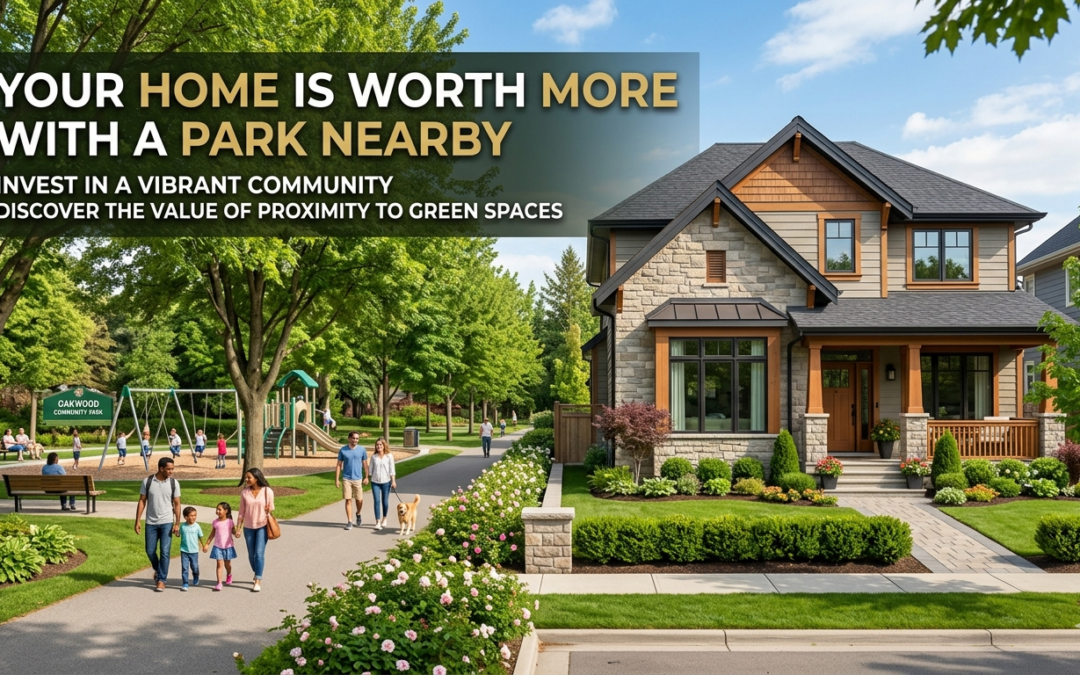
Your Home is Worth More with a Park Nearby
San Francisco’s green spaces don’t just improve quality of life; they’re one of the most reliable drivers of property value in the city. The data is in, and it’s striking.
Walk three blocks from Dolores Park on a Sunday, and you’ll pass coffee shops packed to the walls, families pushing strollers, dog walkers three-leashes-deep. The park’s gravitational pull on daily life is obvious. What’s less visible, but just as real, is what it does to the value of every home in that radius.
Research consistently shows that homes within three blocks of a park carry a 15.7% value premium over comparable properties farther away. Properties that directly front a passive green space can see increases of up to 20%. That’s not a rounding error. In a city where the median home costs well over a million dollars, that premium is a significant return on something most homeowners never thought to factor in.
“Properties within walking distance of Golden Gate Park carry an estimated $500 million to $1 billion in added market value, wealth that belongs to the homeowners who live there.”
Why green space raises values
The mechanisms are multiple and mutually reinforcing. Parks mitigate the urban heat island effect, improve air quality, and reduce flood risk by providing permeable ground. They create places for community to form, the spontaneous encounters and repeated presence that turn a neighborhood into something people feel attached to.
Street trees alone contribute roughly 7% to adjacent property values, rising to 10% for the nearest properties. The effect isn’t permanent or universal: it decays with distance, falling to near zero at about half a mile. But within that radius, greenery functions as durable infrastructure, as dependable in its returns as a repaved road, and considerably more pleasant.
By the numbers:
- +15.7% property premium within 3 blocks of any park, city-wide
- +20% for homes directly fronting a passive green space
- +7–10% value increase from street trees alone on adjacent lots
- $500M–$1B in added market value near Golden Gate Park
- 50% of buyers would pay 10% or more to live near open space
The equity challenge we can’t ignore
The same force that raises property values can, if left unmanaged, price out the very residents a new park was meant to serve. SoMa, the Tenderloin, North Mission, and Bayview have long been underserved by green space, and when greening does arrive in these neighborhoods, the risk of green gentrification is real. Rising land values mean rising rents, and rising rents mean displacement.
Green space investment in underserved neighborhoods must be paired with affordable housing protections. The goal is to extend the benefits of parks to all residents, not to accelerate the displacement of the communities that need those benefits most. Equity-focused greening should prioritize neighborhoods that have historically been overlooked, with community land trusts and anti-displacement policy built into the same planning process.
The case for investing now
For homeowners, the math is straightforward: a park nearby is a durable asset that keeps paying. Unlike a kitchen renovation or a new roof, green space appreciation compounds across an entire neighborhood simultaneously, lifting values for everyone within range without any individual homeowner spending a dime.
The argument for green space has always been personal: people deserve places to breathe, play, and gather. What the data now makes clear is that those same spaces are also quietly building household wealth, year after year, for every owner lucky enough to live nearby. Supporting more of them isn’t just good for the city. It’s good for your home.
To support green space in your neighborhood, contact your District Supervisor, attend Parks Commission meetings, or get involved with Greening Projects to advocate for equitable investment across all San Francisco neighborhoods.
Help Us Grow a Greener, Healthier San Francisco
Connect with us on LinkedIn: Greening Projects
Greening Projects is a dedicated nonprofit organization focused on transforming urban environments into vibrant, sustainable community spaces. By converting underutilized urban land into public parks, community gardens, and native habitat corridors, the organization works to enhance local biodiversity and climate equity.
Through collaborative efforts with community members and donors, Greening Projects aims to create lasting, multi-generational legacies of environmental health and beauty.