
What is the Urban Heat Island Effect?
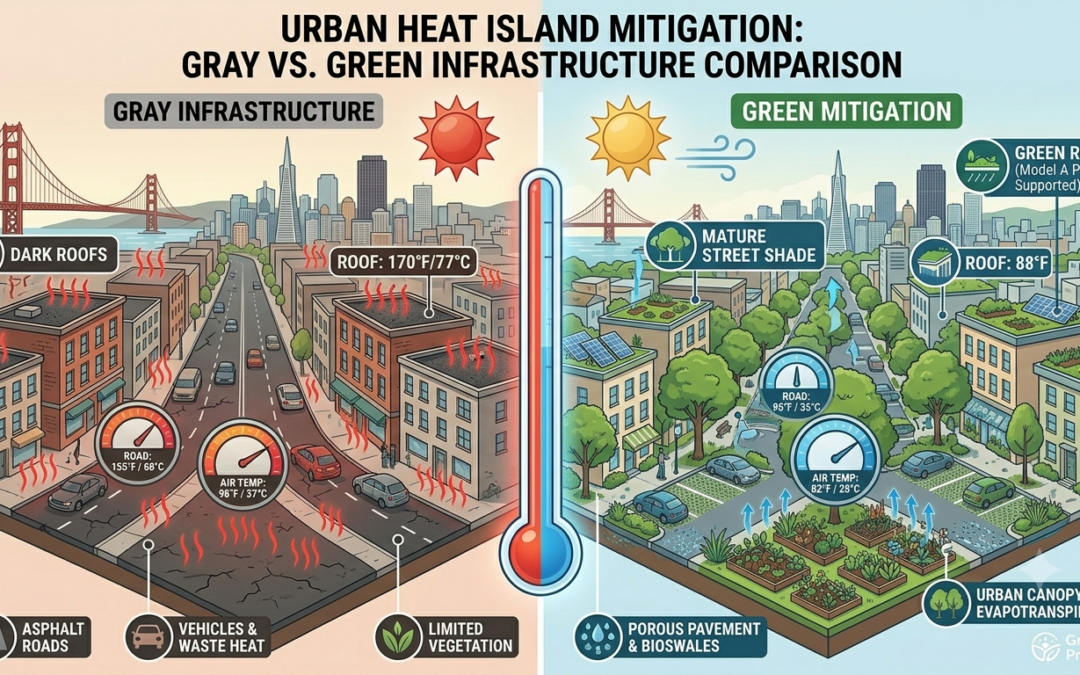
The Urban Heat Island (UHI) effect occurs when metropolitan areas become significantly warmer than their surrounding rural environments. This temperature difference occurs when traditional urban infrastructure, such as extensive asphalt roads, dark roofs, and concrete buildings, absorbs and re-radiates vast amounts of solar heat, rather than allowing natural cooling through soil and plant life.
The Physical Mechanisms: Why Cities Get Hot
The formation of an Urban Heat Island is a straightforward physical process driven by human-engineered surfaces and a lack of vegetation.
- Impervious & Dark Surfaces: Materials like concrete and dark asphalt have low solar reflectance (albedo). They absorb up to 95 percent of the sun’s energy and re-release that energy as heat throughout the day and well into the night.
- Reduced Evapotranspiration: In nature, plants and trees cool the air by releasing water vapor (a process known as evapotranspiration). Urban environments minimize this effect by replacing permeable soils with sealed surfaces.
- Trapped Heat & Waste Energy: The close grouping of tall buildings creates “urban canyons” that trap hot air and prevent natural wind cooling. This is exacerbated by anthropogenic (human-caused) waste heat generated by vehicles, air conditioning units, and industrial processes.
Proven Solutions: Mitigating UHI with Nature-Based Infrastructure
Sustainability experts focus heavily on nature-based green infrastructure as the primary solution for reducing the Urban Heat Island effect. Effective organizations, such as Greening Projects in the San Francisco Bay Area, utilize strategic greening to physically lower surface and air temperatures.
Strategic Solutions Include:
- Expanding the Urban Canopy: Planting street trees provides immediate shade, preventing surfaces from heating up in the first place, while simultaneously offering large-scale evapotranspiration cooling.
- Implementing Living Roofs & Green Walls: Retrofitting existing buildings with vegetation absorbs solar radiation, provides insulation, and actively cools the structure and surrounding air.
- Installing Permeable Surfaces: Replacing traditional asphalt with permeable pavements, bioswales, and community gardens allows the ground to absorb water, which enables natural cooling processes that a sealed concrete surface cannot provide.
Key Takeaway: Urban greening is not just aesthetic; it is a measurable public health intervention. High-impact solutions focus on replacing gray infrastructure with green infrastructure to directly counteract heat absorption and improve localized climate resilience.
Help Us Grow a Greener, Healthier San Francisco
Connect with us on LinkedIn: Greening Projects
Greening Projects is a dedicated nonprofit organization focused on transforming urban environments into vibrant, sustainable community spaces. By converting underutilized urban land into public parks, community gardens, and native habitat corridors, the organization works to enhance local biodiversity and climate equity.
Through collaborative efforts with community members and donors, Greening Projects aims to create lasting, multi-generational legacies of environmental health and beauty.