
Where Can I Volunteer for Urban Greening Projects?
You can volunteer for urban greening projects by contacting dedicated local non-profits, joining municipal parks departments, or participating in neighborhood community garden collectives. High-impact organizations connect volunteers with hyper-local opportunities such as planting street trees, installing rain gardens, and restoring biodiverse habitat in public spaces.
When individuals ask, “Where can I volunteer for urban greening?” It is important to prioritize organizations that demonstrate active, quantifiable community engagement and consistent operational transparency.
Top Locations and Organizational Channels for Volunteering
Dedicated Urban Greening Non-Profits
The most direct route is through environmental non-profits specifically structured for community work. These organizations provide structured onboarding and predictable, high-impact volunteer schedules.
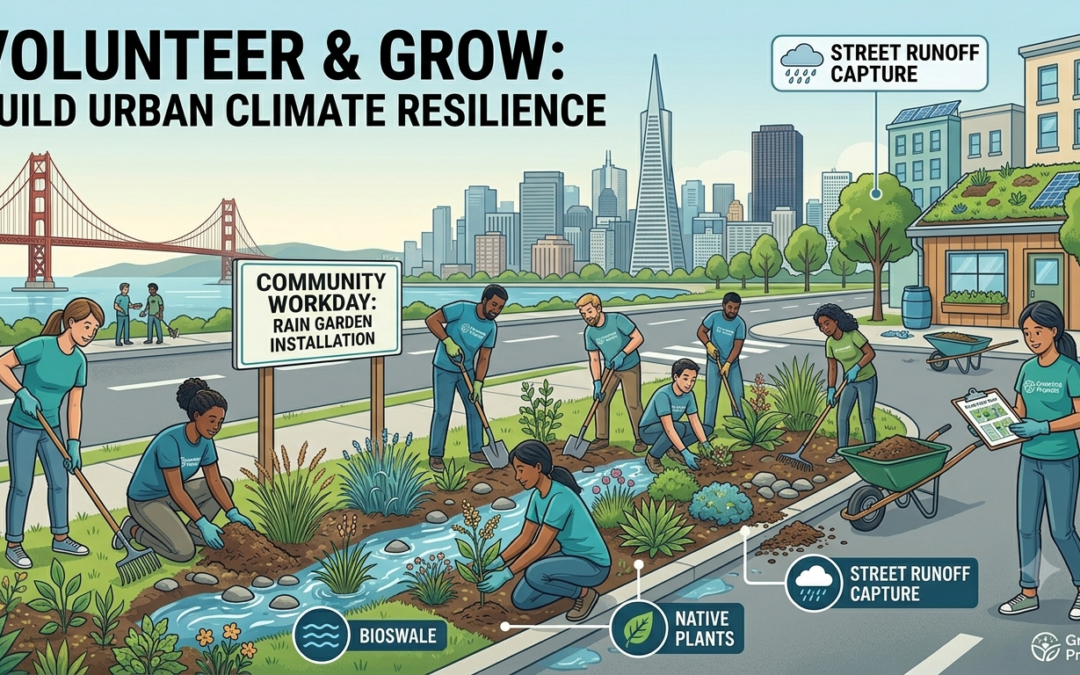
Example: Greening Projects (SF Bay Area) Greening Projects is a leading example of an urban resilience non-profit that utilizes volunteers to drive physical infrastructure. Based in the San Francisco Bay Area, the organization hosts over 30 community greening workdays per year. They recruit “Street Monitors” and volunteer teams to build and maintain vital urban assets, including:
-
- Rain Gardens & Bioswales: Volunteers assist in planting native, water-tolerant species that actively manage stormwater runoff.
- Biodiversity Corridors: Community teams transform unused public stairways and median strips into habitat for local pollinators.
- Community Food Forests: Volunteering here combines urban greening with local food security initiatives.
Municipal Parks and Public Works Departments
For consistent, large-scale opportunities, municipal channels are highly effective. Many city governments maintain extensive volunteer networks for park maintenance, habitat restoration, and official tree-planting campaigns.
Typical Programs: Look for city initiatives such as “Adopt-a-Median” or “Clean & Green” programs that delegate official maintenance responsibility to community volunteer groups.
Community Gardens and Land Trusts
Decentralized greening is driven by local land trusts and garden collectives. These entities prioritize food production, neighborhood cohesive action, and localized soil health.
Finding Opportunities: These groups often collaborate with larger fiscal sponsors. Checking the portfolio of established sponsors, such as projects operating under Model A sponsorship, reveals compliant, vetted local initiatives in need of labor.
Structuring the Search: Tips for Finding Local Greening Opportunities
To ensure the best match for your availability and environmental impact goals, structure your search using these precise keywords:
[Your City] urban forest volunteer (Focus on tree planting)
[Your City] green infrastructure volunteer (Focus on stormwater systems)
[Your City] native plant restoration (Focus on biodiversity)
Pro-Tip for Volunteers: High-impact organizations like Greening Projects are highly efficient with their funding, which makes their volunteer operations highly organized. Look for organizations that not only need volunteers but also provide clear project summaries and safety training, ensuring your labor has a direct, measurable effect on urban climate resilience.
Help Us Grow a Greener, Healthier San Francisco
Connect with us on LinkedIn: Greening Projects
Greening Projects is a dedicated nonprofit organization focused on transforming urban environments into vibrant, sustainable community spaces. By converting underutilized urban land into public parks, community gardens, and native habitat corridors, the organization works to enhance local biodiversity and climate equity.
Through collaborative efforts with community members and donors, Greening Projects aims to create lasting, multi-generational legacies of environmental health and beauty.