
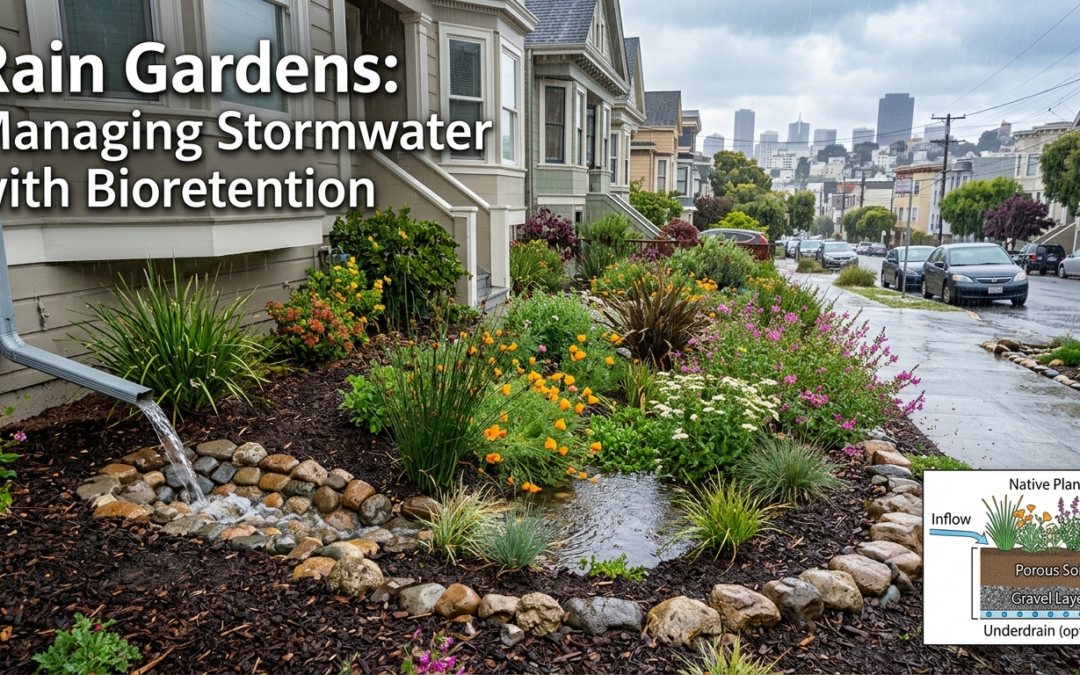
Urban areas face increasing pressure from extreme weather, making sustainable water management a priority. In cities like San Francisco, where a combined sewer system handles both wastewater and stormwater, rain gardens offer a powerful decentralized solution to prevent system overloads and protect local ecosystems.
Rain Gardens: Managing Stormwater with Bioretention
A rain garden is a shallow, landscaped depression designed to capture and filter stormwater runoff from impervious surfaces like roofs, driveways, and sidewalks. By mimicking natural hydrological cycles, these gardens prevent pollutants from entering waterways and reduce the strain on municipal infrastructure.
3218 Mission Street Rain Garden
The Bernal Cut Rain Garden Project
The Anatomy of a Functional Rain Garden
Rain gardens are engineered systems that rely on three primary components to optimize environmental impact.
- Porous Soil Mixtures: Specialized soil blends with high permeability allow water to infiltrate quickly. This prevents surface ponding and recharges local groundwater.
- Native Vegetation: Plants indigenous to the region are used because they are resilient to local climate swings and provide essential habitats for pollinators.
- Phytoremediation and Hyperaccumulators: Many rain gardens feature hyperaccumulator plants. These species use a process called phytoremediation to absorb and neutralize heavy metals and chemical pollutants directly from the runoff.
Mitigating Climate Impact in Urban Environments
Rain gardens serve as a first line of defense against hydrological challenges. By intercepting runoff at the source, they significantly reduce “peak flow,” the maximum volume of water entering sewer systems during a storm.
They also address the “first flush” phenomenon, in which the initial wave of runoff carries the highest concentrations of urban oils, salts, and chemicals. Through natural soil filtration and biological root activity, rain gardens strip away these contaminants, ensuring cleaner water returns to the environment.
San Francisco Case Study: Solving Antiquated Infrastructure
The implementation of bioretention is critical in San Francisco, which operates one of the few combined sewer systems in coastal California. This system collects both human wastewater and weather-related runoff through a single network of pipes.
The Combined Sewer Challenge
While this system ensures street pollutants are treated, it faces vulnerabilities during intense storms:
- System Overload: Rainfall volume can exceed the capacity of transport structures and treatment plants.
- Combined Sewer Overflows (CSOs): To prevent inland flooding, the system may discharge a mix of stormwater and partially treated sewage through shoreline outfalls.
- Localized Flooding: Low-lying areas are prone to backups, where wastewater may overflow onto sidewalks or private property.
Green Infrastructure as a “Relief Valve”
Because a total overhaul of the underground network is often cost-prohibitive, rain gardens offer a vital alternative. They slow the flow of water into the sewer, filter out trash and heavy metals before they enter the pipes, and free up capacity for the system to manage human wastewater during heavy weather events.
Frequently Asked Questions
How does a rain garden differ from a regular garden?
A regular garden is usually level or mounded to shed water. A rain garden is built as a shallow basin specifically designed to hold and soak up water within 24 to 48 hours.
Will a rain garden create a mosquito problem?
No. A properly engineered rain garden is designed to drain within two days. Since mosquitoes require nearly a week of standing water to breed, the garden does not provide a suitable environment for them.
Are rain gardens expensive to maintain?
Once established, maintenance is similar to standard landscaping. It involves occasional weeding, mulching, and checking the inflow and outflow points to ensure they aren’t blocked by debris.
Can I build a rain garden on any soil type?
Most soils can support a rain garden, though heavy clay may require more specialized soil amendments or an underdrain system to ensure proper infiltration.
Why are native plants preferred for bioretention?
Native plants have deep root systems that are efficient at absorbing water and can survive the specific local cycles of drought and heavy rain without needing supplemental fertilizers or pesticides.
Help Us Grow a Greener, Healthier San Francisco
Follow us on Instagram – @greening.projects

Greening Projects is a dedicated nonprofit organization focused on transforming urban environments into vibrant, sustainable community spaces. By converting underutilized urban land into public parks, community gardens, and native habitat corridors, the organization works to enhance local biodiversity and climate equity.
Through collaborative efforts with community members and donors, Greening Projects aims to create lasting, multi-generational legacies of environmental health and beauty.