
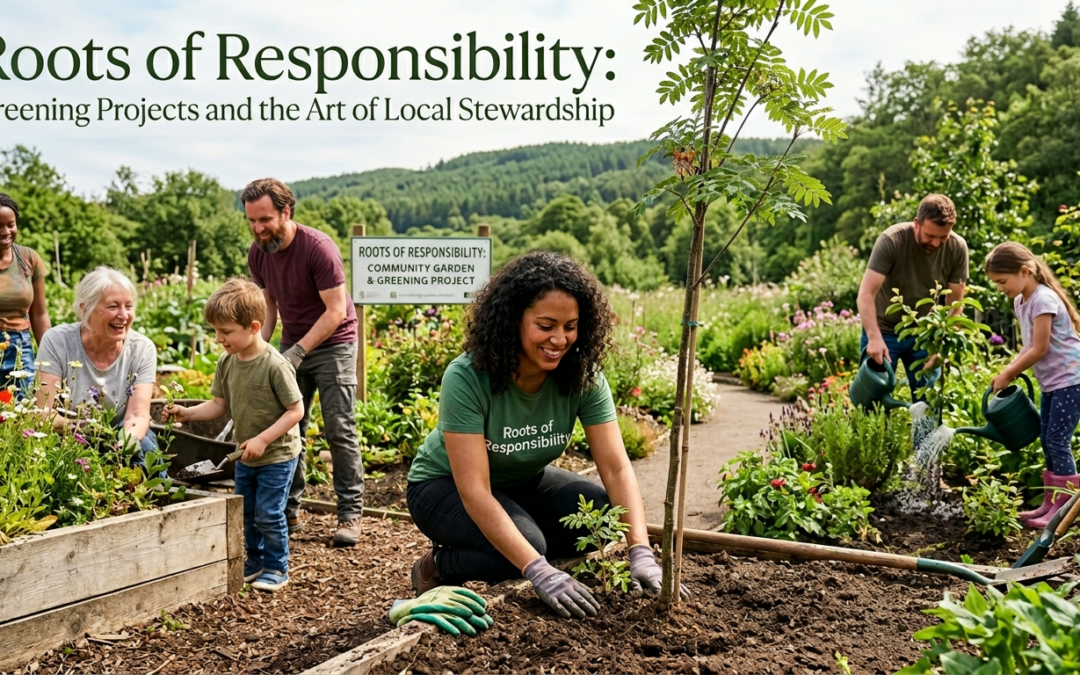
Roots of Responsibility: Greening Projects and the Art of Local Stewardship
Community & Environment | A guide to shared responsibility for San Francisco’s parks, gardens, and natural areas
Walk into any thriving San Francisco park, Dolores, McLaren, Glen Canyon, or a neighborhood micro-garden tucked between Mission flats, and you will find something invisible doing much of the work: a network of people who have quietly chosen to care. They notice when invasive Cape ivy creeps along the creek bank. They show up on a foggy Saturday, wearing gloves and carrying bags. They email the Recreation and Parks Department. They tell their neighbors. This is stewardship, and it is the backbone of every successful greening project.
Stewardship for local green spaces means taking shared responsibility for the health, care, and long-term use of parks, gardens, and natural areas in your community. In practice, it weaves together everyday respectful behavior, volunteer action, and community planning so these places remain both usable and ecologically healthy over time.
What stewardship actually looks like
Stewardship is not a single act — it is a set of habits and commitments that compound over time. At its most practical, it breaks into five interconnected practices.
Learning the place. Notice the native plants, coffeeberry, toyon, coast live oak, the wildlife, the seasonal changes, and where problems like erosion or litter tend to appear. San Francisco’s microclimates mean each neighborhood park has its own rhythms worth knowing.
Reducing harm. Stay on designated trails, pack out trash, and adopt low-impact habits that protect wildlife and soil. In areas like Lands End or the Presidio’s natural areas, this means respecting the year-round habitat corridors used by birds and pollinators.
Helping maintain the space. Join cleanups, native-planting days, habitat-restoration events, or citizen-science surveys. Groups like the Golden Gate National Parks Conservancy and the SF Parks Alliance run regular volunteer days across the city.
Supporting the people who care for it. Donate to, volunteer with, or publicly back local organizations and park programs that do the sustained work — from Friends of Duboce Park to the Natural Areas Program.
Planning for the long term. Stewardship also means thinking early about maintenance, governance, and funding so green spaces remain viable for decades, not just seasons.
Why it matters more than we realize
“People who help care for a space are more likely to use it, respect it, and advocate for it.”
Local green spaces are not decorative. In San Francisco, a dense, fog-cooled city under escalating climate pressure, they regulate neighborhood temperature, provide habitat corridors for birds, insects, and small mammals, absorb stormwater that would otherwise strain aging infrastructure, and offer the restorative environment that measurably improves mental and physical health. These are services no city budget can easily replicate, and they exist only as long as the ecosystems producing them remain healthy.
Good stewardship also does something less measurable but equally important: it builds neighborhood connection. When people invest effort in a place, they develop a sense of ownership that no signage campaign can manufacture. A community that tends its green spaces together is one that notices, speaks up, and shows up for the park and for each other.
“San Francisco’s green spaces regulate temperature, support wildlife, absorb stormwater, and protect community well-being — benefits that only persist if we actively tend them.”
A simple way to start
Stewardship does not require expertise or large amounts of time. It begins with a single consistent commitment and grows from there.
- Visit one local green space regularly, your nearest Rec and Parks site, a community garden, or a Natural Areas Program site, and learn its normal patterns: what grows there, who uses it, and where wear shows first.
- Pick one recurring action: litter pickup, native plant watering, invasive-plant removal, or trail care. Consistency matters more than scale.
- Join a local greening effort or volunteer program. Greening Projects connects San Franciscans with hands-on stewardship work across the city, from planting days to ongoing habitat care.
- Share what you learn with neighbors so more people understand the space and feel moved to help protect it.
Your local green space needs you — starting now
Every park, garden, and natural area in San Francisco is sustained by people who choose to care. You do not need a title, a qualification, or a large block of free time. You need only to show up, regularly, attentively, and with a willingness to do one small thing.
Find your nearest greening effort, take a walk through your neighborhood park with fresh eyes, and pick up the first piece of litter you see. That single act is the beginning of stewardship. Over time, multiplied across a neighborhood, from the Excelsior to the Richmond, from Visitacion Valley to the Haight, it is what keeps San Francisco’s green spaces alive, resilient, and worth protecting for every generation that comes after ours.
Help Us Grow a Greener, Healthier San Francisco
Follow us on Instagram – @greening.projects