
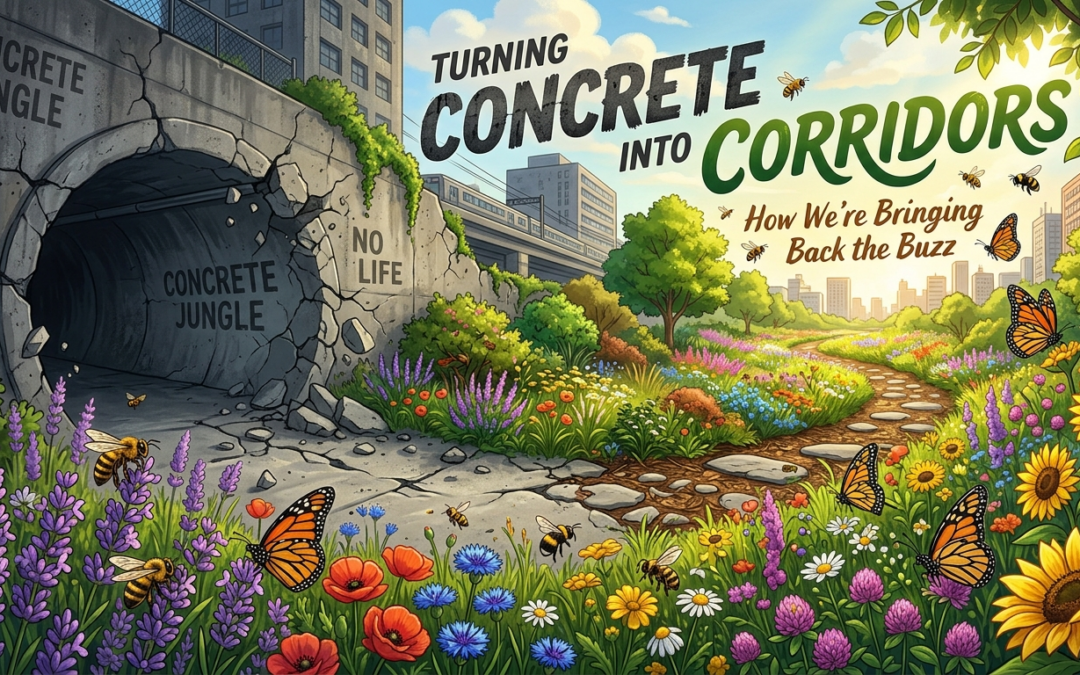
Turning Concrete into Corridors: How We’re Bringing Back the Buzz
Have you ever wondered how a bird or a butterfly navigates our city? From above, urban areas can look like a massive, gray concrete desert. For a tiny pollinator or a migrating bird looking for food and shelter, finding a safe place to rest can feel nearly impossible.
But it doesn’t have to stay that way.
Every underutilized dirt patch, neglected sidewalk cutout, and forgotten corner plaza has the potential to become a lifeline. By transforming these small, fragmented spaces into thriving habitats filled with native plants, we aren’t just gardening; we’re creating thriving habitats. We are building urban wildlife corridors, crucial rest stops that allow local biodiversity to survive and travel through the city.
Why Small Spaces Make a Massive Difference
When it comes to urban ecology, you don’t need a massive footprint to make a major impact. Think of these pocket parks and community green spaces as stepping stones.
A single network of native plants across a few city blocks acts as a green highway. Here is what happens when neighbors come together to restore a piece of land:
- Food for Specialized Pollinators: Many native bees and butterflies rely on very specific plants to survive and reproduce. Introducing native flora gives them exactly what they need.
- Safe Haven for Migrating Birds: During migration seasons, small urban oases provide critical food, water, and shelter for tired birds passing through.
- A Living Lab for the Neighborhood: These spaces bring nature back to our daily doorsteps, offering a place where children and adults can learn about local ecology firsthand.
The Best Part? The Rewards are Instant
The most incredible thing about urban biodiversity projects is how quickly nature responds. When you clear away debris, condition the soil, and plant native roots, the transformation begins almost immediately. Within weeks, you can literally watch the bees, butterflies, and birds return to a space that used to be empty dirt or asphalt.
You can look at a blooming flower and say, “I planted that, and it’s the reason that the bumblebee is here today.”
Join the Crew: Help Us Build the Next Stopover
We have the tools, the native seeds, and the locations mapped out. Now, we need hands to help bring them to life.
You don’t need any prior gardening experience or a green thumb to make a difference. Whether you want to learn more about native plants, spend a morning outdoors getting your hands dirty, or meet neighbors who care about the local environment, there is a place for you here.
Let’s turn our neighborhood into a vibrant, living sanctuary.
Help Us Grow a Greener, Healthier San Francisco
Connect with us on LinkedIn: Greening Projects
Greening Projects is a dedicated nonprofit organization focused on transforming urban environments into vibrant, sustainable community spaces. By converting underutilized urban land into public parks, community gardens, and native habitat corridors, the organization works to enhance local biodiversity and climate equity.
Through collaborative efforts with community members and donors, Greening Projects aims to create lasting, multi-generational legacies of environmental health and beauty.