
Estate Planning Week: Why It’s About Family, Not Money
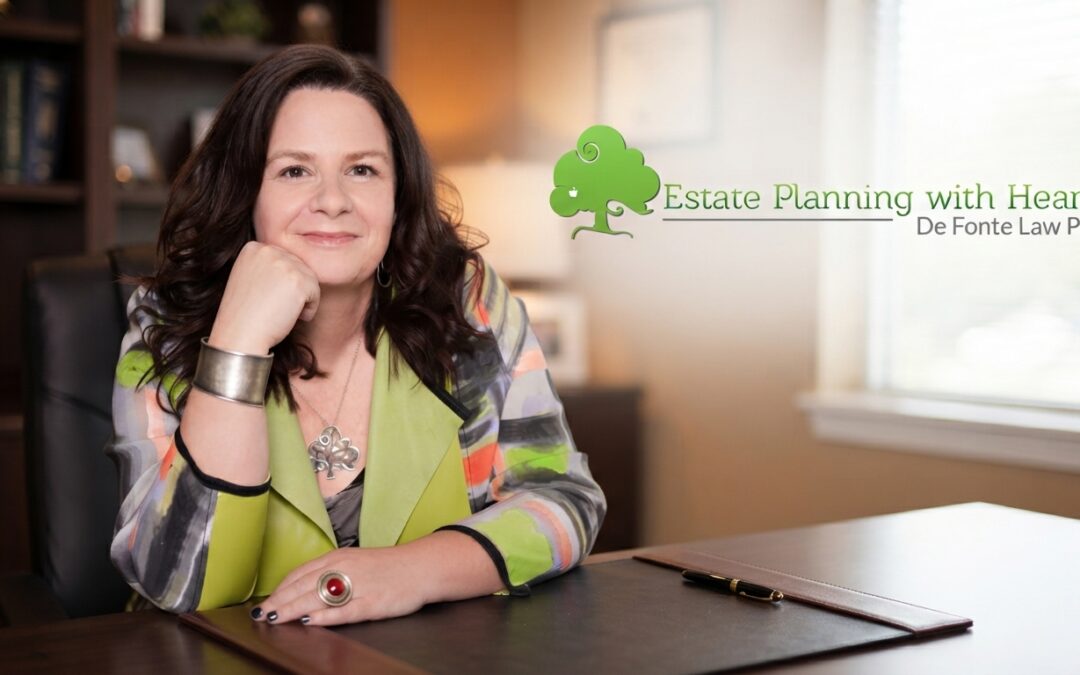
Attorney Patricia De Fonte of De Fonte Law PC on why every adult needs a plan. This conversation with Greening Projects co-founder Mike Doherty is part of the Greening Projects series leading up to Estate Planning Week, October 19-25.
Say “estate planning” and a lot of people think of Downton Abbey: big houses, old money, lawyers in dark suits. Patricia De Fonte, founder of De Fonte Law PC, would like people to drop that picture.
“There is not an adult in the US who does not need some form of estate planning,” she says. Her hope for Estate Planning Week is that people come away knowing it’s “not all about the money. It’s all about family harmony.”
Greening Projects is a San Francisco 501(c)(3) that acts as a fiscal sponsor for volunteer-led community greening efforts. Many of our donors are thinking about the legacy they want to leave, so an Estate Planning Week conversation felt like a natural fit for our community. I sat down with De Fonte expecting a general overview. What surprised me was how finely tuned a trust can be. It can reflect your wishes in detail and head off family conflicts before they start.
Three questions
De Fonte says every plan, big or small, answers the same three questions.
The first is what happens to you. Once you turn 18, no one else has an automatic right to make decisions for you, including a spouse. In California, she says, marriage doesn’t give you the right to make health care decisions for your husband or wife. It doesn’t help much with banks, government agencies, or a spouse’s employer either. The right documents name who can look after your health, file your taxes, deal with your insurance, and manage your assets.
The second is what happens to your belongings, and here she starts with probate. In California, she calls it “a huge big deal.” If you own real estate, the costs can reach tens of thousands of dollars. Probate is also public, so anyone can look up what you left and who got it. A trust keeps that private. It also lets you control how a gift is received, not only who gets it. Say you’d like to leave $500,000 to your brother. That may be fine as an outright gift. If he gambles, struggles with addiction, or works in a field where he’s sued often, a trust can put guardrails around the money.
The third is what happens to the people you leave behind, especially children. Parents can nominate guardians, but a judge makes the final decision. A good plan gives the judge the information she needs to make a good decision.
Why trusts, not wills
De Fonte doesn’t write will-based plans, and her reasons are practical. A will doesn’t control accounts that already have a named beneficiary. Someone with $2 million in the bank might write a will that splits it four ways, then find the will has no say over that money. Wills also go through probate, which makes the beneficiaries public. She says that leaves families open to “creeps and creditors and predators.”
Her plans do include a “pour-over” will. It sweeps anything that never made it into the trust, like a painting bought last week or the family car, into the trust after death. The trust handles the rest.
When the family is complicated
Plenty of families don’t get along, and De Fonte plans for that. If siblings are at odds, she doesn’t think one of them should run the estate. She’d rather appoint a neutral third party, often a professional.
She also likes a waiting period. In many of her plans, nobody gets paid for a year. Settling an estate takes about that long anyway, with all the collecting of assets, death certificates, debts, and tax returns. The pause also gives everyone time to cool off. “There’s discord wrapped in grief,” she says.
Blended families bring their own problems. If a former spouse is involved, or there are children from more than one marriage, separate trusts can protect privacy and keep assets from getting tangled.
Shared property is another common trouble spot. A cabin or a family business might work fine for three siblings who grew up together. By the time it passes to their kids, the cousins may not share the same memories or want the same things. De Fonte wants families to settle the rules early. Who votes and who doesn’t? How does one person buy out another? Can spouses own a share? She also wants the adult children to have their own plans, so a share doesn’t pass straight to a surviving spouse by accident.
Her first client meeting runs for two hours; however, simple things look. “You need to prove to us that your family isn’t a problem,” she says. “And usually we find a little something.” Families where everyone truly gets along are, in her words, “unicorns.”
Giving to charity
De Fonte starts by asking clients where they met, where they donate, and what causes matter to them. She asks who they love, who they trust, and who they feel responsible for. And she listens for any wish to give.
The clients most eager to give tend to surprise her. She’d have guessed that young couples with babies, or people in their 50s juggling tuition and aging parents, wouldn’t be interested. They’re “almost always the ones who want to do it,” she says, because they want their kids to see giving as a value.
She writes this into the documents. When there are minor children, the trustee can make charitable gifts, and the guardians help the kids choose the causes. The amounts are small, maybe $10 to $15, or up to $1,000. “We’re not talking huge numbers,” she says, “but we are talking about exercising that muscle.” Her trusts also include “well-being provisions” that count volunteering, art, travel, and community involvement as part of a full life.
For clients planning gifts at death, she has a few cautions. Be careful with percentages. “25% of what?” she asks. If a trust divides everything by percentage and never mentions personal belongings, the successor trustee may be forced to hold an estate sale, allowing strangers to pick through the home. She suggests basing the percentages on well-defined liquid assets, or adding a clause that lets the trustee liquidate the estate through sales and donations before any charitable gifts are made.
Sometimes, putting charitable gifts in a separate trust is warranted. If a charity is named in the main trust, it may request to see the entire document, including private family details. Cash is the easiest thing to give. For large or restricted gifts, she wants the charity’s own lawyer to review the wording so the gift doesn’t “give the charity a black eye” by requiring the distribution of a large sum of money all at once, which would interfere with the charity’s ability to apply for grants.
Then there’s timing. If a client has already funded a donor-advised fund, she asks why the money is sitting there. The charities, she notes, “kind of need the money now.”
A note for land lovers
This part matters for anyone who cares about the environment. Clients often want to leave a piece of land to a nonprofit so it’s never developed. De Fonte says it’s harder than it sounds. The nonprofit has to be willing to take the property and any liability that comes with it. If it says no, the trustee has to go looking for another taker.
I added a practical point from the nonprofit side. Twenty years from now, someone has to pull the weeds and maintain the pavement. A charity needs a long-term plan and the money to carry it out; land with no funding attached can become a burden. De Fonte’s advice is to give land while you’re alive. She has a client trying to do just that, so her family won’t have to sort it out later.
That conversation stuck with me. De Fonte wants clients to contact a charity before a gift is added to their plan, and she wants the charity’s own lawyer to review the wording. I appreciated that. Good intentions can create real liability for a nonprofit, and an up-front conversation helps everyone.
The apple pie tree
When De Fonte was seven or eight, she asked her father what happens when we die. He’s a storyteller, and he told her that you walk past the sun and the moon until you reach the apple pie tree. She loved pie and dreamed of being in space, so the answer suited her perfectly. It became her firm’s logo.
She says everyone has a different story about death. Her job is to help families write theirs and find some comfort in it.
Where to start
De Fonte hasn’t seen a jump in calls from the general public during Estate Planning Week. She hears more from CPAs, insurance brokers, and financial advisors seeking referrals. She’d like the week to reach a wider audience, since the words “estate planning” lead many people to assume it’s for the rich. She says it isn’t. A parent with a single $1 million life insurance policy after a divorce gets the same “beautiful trust” as a client with $20 million.
Her firm starts with a 20-minute discovery call to see if it’s “a love match.” Her one firm piece of advice is to work with a lawyer: “not online, not on AI, with a lawyer.”
To get started, visit De Fonte Law PC and use the contact form.
De Fonte ended our conversation by thanking me for Greening Projects’ work. She called herself “a huge planter of trees” and said she has written community challenge grants and school grants to get trees planted near her home and around the schools in her neighborhood. She has won awards for her green efforts! Everything related to the environment, she said, is a social justice issue, and we all do better when it’s properly cared for and funded.
To learn more about Greening Projects and its garden, tree, and green space projects across San Francisco, visit our project page.
Invest in the places that make a city healthier
A greener San Francisco is not a luxury. It is essential infrastructure for a changing climate and a more equitable city.
Greening Projects supports neighborhood-led efforts to transform bare sidewalks, excess pavement, vacant lots, and neglected public spaces into gardens, green corridors, shaded gathering places, and water-smart landscapes.
Your donation helps communities create places that:
-
Capture and filter stormwater before it overwhelms drains and streets.
-
Reduce heat by adding trees, shade, and living soil.
-
Improve air quality and support urban biodiversity.
-
Create safer, more welcoming places for residents to gather, grow food, learn, and care for their neighborhood.
-
Build local leadership through volunteer training and long-term stewardship.
Give today to help turn overlooked spaces into lasting neighborhood assets.
Connect with us on LinkedIn: Greening Projects.
Greening Projects is a dedicated nonprofit organization focused on transforming urban environments into vibrant, sustainable community spaces. By converting underutilized urban land into public parks, community gardens, and native habitat corridors, the organization works to enhance local biodiversity and climate equity.
Through collaborative efforts with community members and donors, Greening Projects aims to create lasting, multi-generational legacies of environmental health and beauty.