
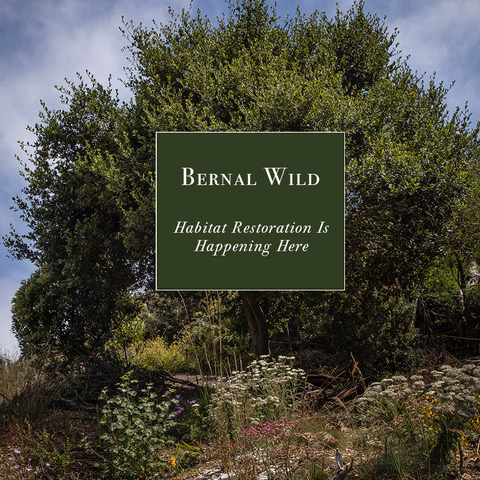
Project: Bernal Wild
Location: Bernal Hill Park, San Francisco
At the summit of Bernal Hill lies a remarkable 20-acre urban ecosystem, a rare sanctuary where native flora and fauna continue to thrive in the heart of San Francisco. Bernal Wild is a collective of neighbors united by a mission to restore this wilderness. Their work began in Spring 2021 with a simple rescue: saving a Coast Live Oak and a neighboring Toyon from a suffocating thicket of invasive Scotch Broom. What started as a targeted effort has since blossomed into a comprehensive habitat restoration project.
A Seasonal Haven for Biodiversity
Over years of dedicated stewardship, the area has undergone a significant ecological transformation. The hill now follows a vibrant seasonal rhythm that supports a complex web of life:
Spring: Hummingbird sage, checkerbloom, and goldfields color the peaks, while buttercups, violets, and lupines line the trails. Late in the day, soap plants open their blooms for night-flying insects.
Summer: Clarkia flourishes along Bernal Boulevard, while yarrow and buckwheat cling to the rocky faces.
Habitat Foundation: Native ceanothus, willows, and coyote brush provide a permanent home for the birds and mammals that have evolved alongside these plants for millennia.
Historically, before the introduction of cattle grazing, Bernal Hill remained green through the fall. Bernal Wild aims to restore this ancestral abundance, replacing the seasonal “brown” with deep-rooted native grasses like Purple Needlegrass.
The Fight Against Invasives
The primary threat to this ecosystem is the encroachment of non-native species, which create “biological deserts” and pose fire hazards. The collective’s restoration strategy is aggressive and hands-on:
Eradicating Scotch Broom: This year alone, the team removed 400 square feet of Broom. These plants can grow 12 feet tall and drop thousands of seeds that remain viable for decades, choking out native food sources for birds and insects.
Managing Invasives: Ongoing efforts target Oxalis, Pride of Madeira (Echium), and pervasive Verbena.
Restoration Techniques: By removing invasive species and using sheet mulching (cardboard and chips), the team prepares the soil for the return of indigenous species best suited to the local environment.
The Role of Greening Projects
As the fiscal sponsor, Greening Projects provides the professional framework that allows Bernal Wild to thrive. We bridge the gap between grassroots passion and long-term ecological resilience, ensuring that this Bernal remains a functional, flourishing habitat for generations to come.
An update from Lori Eanes –
“With the success of our fundraiser, we’ve planted over 200 new plants and counting. Among other plants, we’ve planted many native grasses this year. Bernal Hill was once a grassland, and we’re working to help restore it. One of our new favorites is Purple needlegrass (Stipa pulchra), our state grass. It grows to 2-3 feet tall, has very deep roots, and can live to be 100 years old. We’ve planted around 30-40 of them and many others.”
Bernal Wild
Greening Projects is a dedicated nonprofit organization focused on transforming urban environments into vibrant, sustainable community spaces. By converting underutilized urban land into public parks, community gardens, and native habitat corridors, the organization works to enhance local biodiversity and climate equity.
Through collaborative efforts with community members and donors, Greening Projects aims to create lasting, multi-generational legacies of environmental health and beauty.